
Crab Tree Hall ( Part Three)
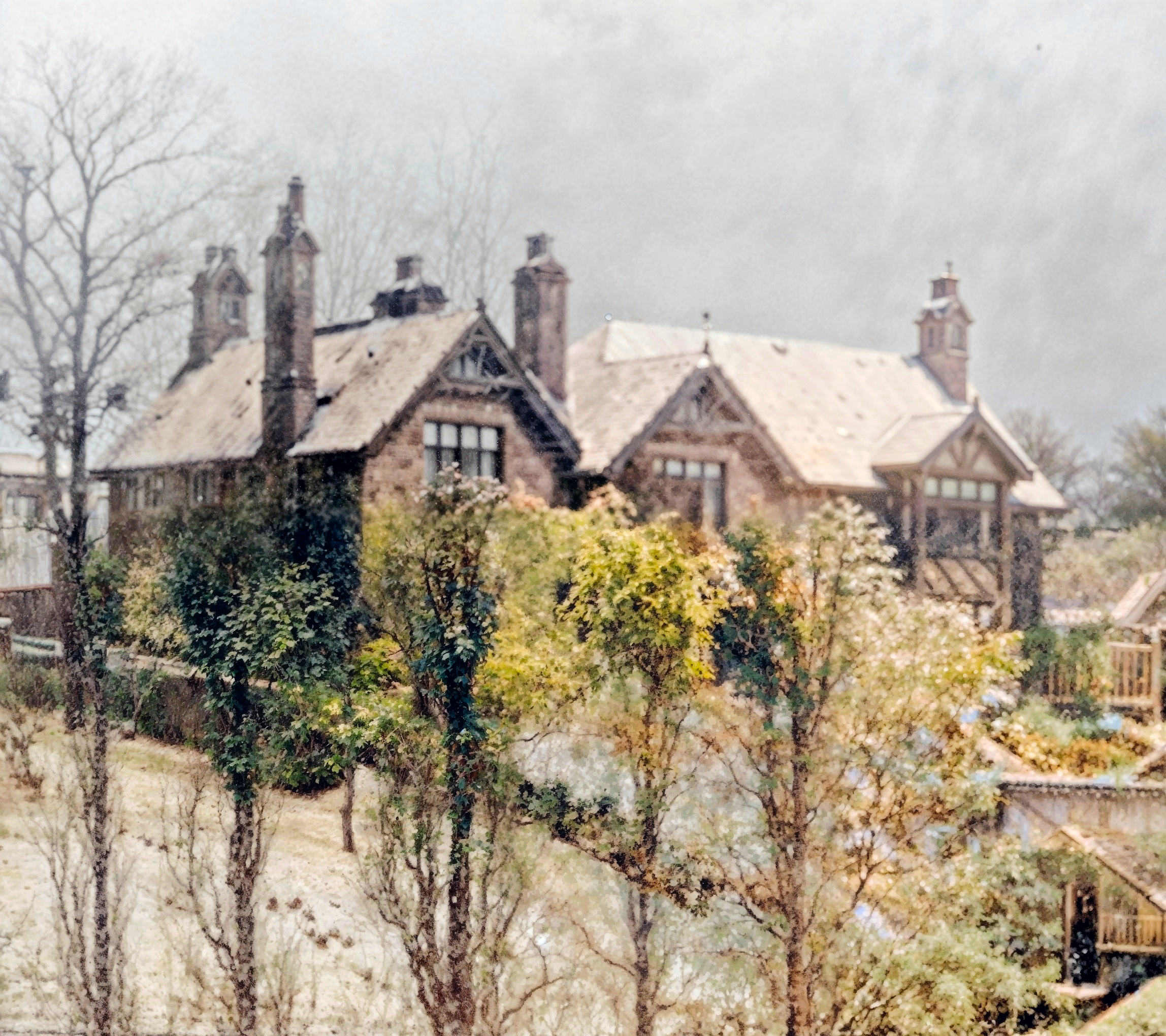
That night, I dreamed of Annabella again. This time, she was older, perhaps in her twenties, sitting by the window in the nursery, staring out at the garden. A profound sadness etched her face, making my heart ache.
A voice called from downstairs—the same voice I’d heard on the video.
‘Annabella, you must come now. The doctor is here.’
She didn’t move, just kept staring out the window, tears streaming down her face.
‘Annabella, please. You can’t stay in here forever.’
But she did. Somehow, in the way of dreams, I knew she would spend countless hours in that room over the decades, rocking gently on the horse that had once brought her such joy, waiting for something—or someone—who never came.
I awoke with tears on my face; the sadness lingering like a physical presence in our bedroom. Beside me, Hilary slept peacefully, unaware of my distress.
What had happened to Annabella Fitzwilliam? What tragedy had befallen her to make her stipulate that her beloved home should remain empty for thirty years after her death?
And more importantly, was she truly at rest, or was she still there, waiting for us at Crab Tree Hall?
The survey came back with no major issues. A few damp patches in the cellar, some woodworm in the attic beams, nothing that couldn’t be addressed. The surveyor was particularly impressed with the overall condition, given how long the house had stood empty.
‘Remarkable preservation,’ he’d said, running his hand along the banister. ‘Almost as if someone’s been looking after it all these years.’
When I asked about the small door in the library, he’d shrugged. ‘Could be storage, could be access to a small room. Not uncommon in houses of this period. Shame it’s locked—might be worth getting a locksmith out.’
Now, three months later, we were finally moving in. The sale had gone through with surprising ease, as if some unseen hand was smoothing our path. We’d spent weeks packing up our London flat, sorting through the accumulated debris of our lives together.
‘Do we really need all these books?’ I’d asked, surveying the towering stacks.
‘Of course we do,’ Hilary had replied without hesitation. ‘They’ll look perfect in the library.’
The library. I couldn’t think of that room without remembering the small locked door and the sense of mystery it evoked.
The removal van pulled up the muddy lane, the driver cursing the potholes. The men began unloading our possessions, tramping back and forth with boxes and furniture while Hilary directed operations with military precision.
I found myself drawn to the nursery again. We’d kept it largely as it was, with the rocking horse still in pride of place. Hilary had found some period-appropriate wallpaper to replace the faded original, but with a similar pattern of pale blue flowers. Hilary had carefully preserved the child’s scribble, protecting it behind a small frame she mounted on the wall.
My name is Annab... aged 7
I stood in the centre of the empty room, listening. No whispers today, no laughter, no movement. Just the distant sounds of the removal men and Hilary’s occasional instructions.
‘She’s quiet today,’ I said aloud, feeling slightly foolish.
A floorboard creaked behind me, and I spun around. Hilary stood in the doorway, a curious expression on her face.
‘Who’s quiet?’ she asked.
I hesitated. We hadn’t really discussed the strange occurrences since that first night, both of us perhaps afraid to give voice to our suspicions.
‘Annabella,’ I said finally. ‘I thought... I’ve been having these dreams about her.’
Hilary stepped into the room, her face softening. ‘Me too. Every night since we first saw the house.’
‘You never said anything.’
She shrugged. ‘I thought you’d think I was being silly. Especially after what happened with the video.’
‘What do you dream about?’ I asked.
She ran her hand along the rocking horse, setting it in gentle motion. ‘Different things. Sometimes she’s a child, playing in the garden. Sometimes she’s older, sitting by the window. She’s always alone, though. Always waiting.’
‘Waiting for what?’
‘I don’t know. But she’s so sad, John. So desperately sad.’
I nodded, remembering my own dreams. ‘In mine, there’s always someone calling her. A woman’s voice.’
‘The governess,’ Hilary said with certainty. ‘Miss Skeeping.’
I stared at her. ‘How do you know her name?’
She blinked, looking confused. ‘I... I don’t know. It just came to me.’
Before I could respond, one of the removal men appeared in the doorway. ‘Where do you want the boxes marked ‘Books,’ miss?’
Hilary seemed relieved by the interruption. ‘In the library, please. I’ll show you.’
As she left, I noticed the rocking horse was still moving, its gentle creaking the only sound in the room.
That night, exhausted from the move, we collapsed into our new bed in the master bedroom. The room was chilly despite the newly installed central heating, and we huddled together under the duvet.
‘It’s going to take a while to heat up properly,’ I said, pulling Hilary closer. ‘These old stone walls.’
She nodded, her eyes already drooping. ‘I don’t mind. It feels right somehow, the coolness. Like the house is breathing.’
I was too tired to question her strange statement. Within minutes, we were both asleep.
The dream came immediately, more vivid than ever before.
Annabella was in her twenties, sitting by the nursery window as before. But this time, I could see what she was looking at—a young man in military uniform walking off down the garden path, his shoulders squared, his stride purposeful.
‘He’ll come back,’ said a voice beside her. Miss Skeeping, the governess, now grey-haired and stooped, but with the same stern expression. ‘Lieutenant Morris is a man of his word.’
Annabella didn’t respond, just kept watching until the young man disappeared from view.
The dream shifted. Annabella was older now, perhaps in her thirties, still sitting by the same window. Miss Skeeping entered, holding a telegram.
‘My dear,’ she said softly. ‘I’m so sorry.’
Annabella didn’t turn, didn’t reach for the telegram. ‘I already know,’ she said. ‘I felt it happen three days ago.’
Another shift. Annabella in her forties, her beauty faded but still evident. A young woman in nurse’s uniform was coaxing her from the nursery.
‘Miss Fitzwilliam, please. Miss Skeeping is asking for you. She doesn’t have much time.’
‘I can’t leave,’ Annabella said. ‘What if he comes while I’m gone? He promised he’d come back.’
‘Miss Skeeping said you’d say that,’ the nurse replied gently. ‘She told me to tell you that Lieutenant Morris would understand. He wouldn’t want you to miss saying goodbye.’
Annabella finally turned from the window, her face a mask of grief and resignation. ‘Very well. But we must be quick.’
The dream fragmented then, showing flashes of Annabella’s life: alone in the big house after Miss Skeeping’s death, growing older, more isolated, spending hours in the nursery with the rocking horse, waiting, always waiting.
And finally, Annabella as an old woman, frail and white-haired, writing something at a small desk. A will, I somehow knew. Her last act was to look out the window once more, then at the rocking horse.
‘Thirty years,’ she whispered. ‘Surely that’s long enough for you to find your way back to me, Edward?’
